
The Rise of Digital Workers: What It Really Means for Recruiters
AI, automation and digital workers are becoming impossible to ignore in recruitment.
But beyond the headlines and promises of what AI could do, what does it actually mean for recruiters today?
That was the focus of The Rise of Digital Workers: What It Means for Recruiters, where Coral Starfish founder Elliott Lack joined the conversation to explore how recruitment firms can embrace greater automation while keeping their technology, data and recruiters working together.
One of the key themes from the RecConnect event was clear: the conversation around AI in recruitment is moving on.
It’s becoming less about “What could AI eventually do?” and much more about “How can we make this useful in our business right now?”


Bullhorn Amplify and the rise of the digital worker
A major focus of the event was Bullhorn and its approach to digital workers through its new AI tooling, Amplify.
The potential is exciting.
Routine and repetitive tasks that have traditionally taken up recruiters’ time can increasingly be handled or supported by AI, helping teams become more productive and giving consultants more time for the conversations and relationships where they add the greatest value.
But there’s an important point here.
For AI to work effectively, it needs access to good information.
Your CRM therefore becomes more important, not less.
If Bullhorn is your system of record, keeping the information within it accurate, complete and up to date allows it to become a powerful system of action when tools such as Amplify are introduced.
And that’s where integrations become an important part of the picture.
What happens when recruiters leave Bullhorn?
Recruiters don’t spend their entire working day inside their CRM.
A significant amount of sourcing and research still takes place elsewhere, particularly on LinkedIn.
This was an important part of Elliott’s discussion at the event.
Coral Starfish enables recruiters to access and work with Bullhorn while they’re outside the platform, helping maintain the connection between LinkedIn activity and the CRM.
Rather than discovering a candidate on LinkedIn and then switching backwards and forwards between systems to check, create or update information, recruiters can carry out those tasks within their existing workflow.
It helps keep Bullhorn at the centre of the recruitment process, even when the recruiter isn’t physically working within Bullhorn.
And as AI becomes more embedded in recruitment workflows, keeping that central source of data accurate becomes increasingly valuable.
AI can help source talent – but recruiters still find the hidden gems
Another interesting discussion was around sourcing.
AI can analyse enormous amounts of information, identify patterns and automate elements of candidate discovery.
But that doesn’t mean every great candidate will suddenly be found automatically.
Recruiters and researchers still bring market knowledge, instinct, curiosity and human judgement to a search.
There will always be those “hidden gem” candidates who aren’t immediately surfaced by technology but are discovered through good old-fashioned research and sourcing.
When a recruiter finds one, the process of getting that person into the CRM shouldn’t create another layer of admin.
Coral Starfish makes it easier to add manually sourced talent from LinkedIn into Bullhorn and maintain the data needed for the wider recruitment process.
It’s a good example of how human expertise, integrations and AI can complement each other rather than compete. You might be interested in reading our insights on ‘AI Won’t Replace Recruiters — Here’s Why Coral Starfish Matters More Than Ever.’

What if you’re not using AI yet?
There was another important point to come out of the event: you don’t need to be using AI to benefit from a better-connected recruitment workflow.
Not every recruitment business is at the same stage of its technology journey.
Some firms will already be exploring digital workers and tools such as Amplify. Others may not be ready for AI yet or may simply prefer to keep certain processes manual.
Coral Starfish can still help recruiters get more from Bullhorn when performing manual tasks from LinkedIn.
Creating records, updating existing information and keeping data flowing back into the CRM can all be made easier without introducing AI into the process.
For smaller recruitment firms in particular, this matters.
Digital transformation doesn’t have to mean implementing everything at once.
Sometimes the biggest immediate productivity gain comes from removing a few repetitive steps from something your consultants already do dozens of times every day.
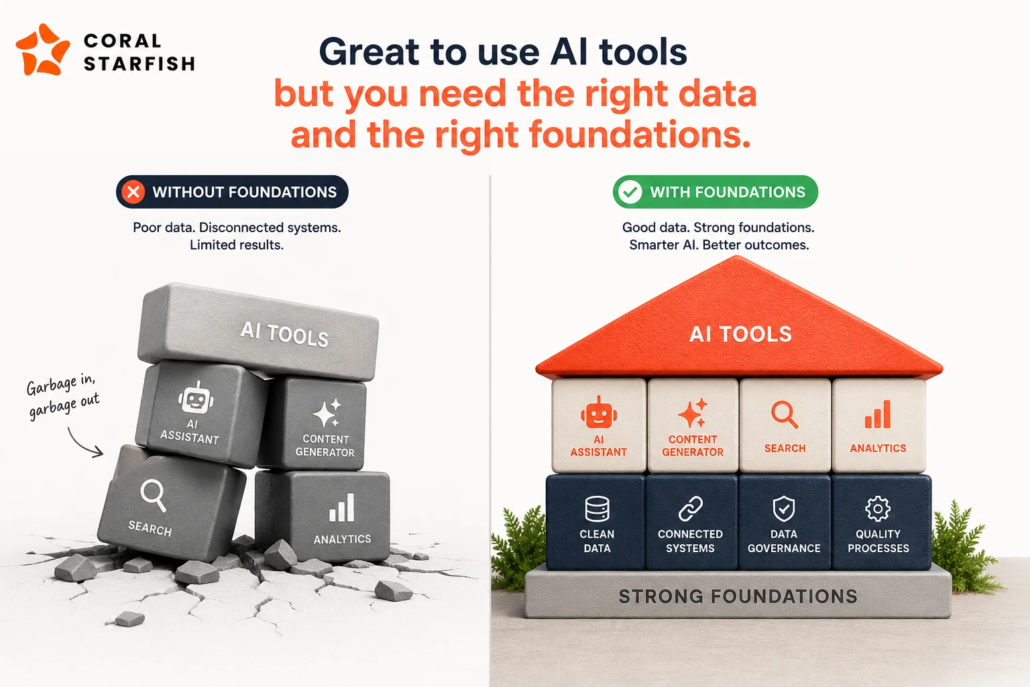
Better automation starts with better foundations
Perhaps one of the biggest takeaways from the discussion was that adding AI on top of disconnected processes isn’t necessarily going to solve the underlying problem.
Recruitment firms need solid foundations.
That means thinking about:
- Where your data lives
- How easily recruiters can update it
- Whether information is being duplicated across systems
- How well your existing technology integrates
- Which repetitive tasks genuinely need automating
- Where human judgement and interaction add the most value
The aim shouldn’t simply be to automate as much as possible.
It should be to create a recruitment workflow where technology takes care of the friction and recruiters can spend more time recruiting.
AI + integration + human expertise
The rise of digital workers doesn’t mean the end of the recruiter.
If anything, it makes the human elements of recruitment even more important.
Technology can handle repetitive tasks, surface information and help keep processes moving.
Integrations can make sure information follows recruiters between the systems they use.
But recruiters still bring the relationships, judgement, market knowledge and ability to spot opportunities that technology may miss.
The opportunity for recruitment firms is therefore not to choose between people or technology.
It’s to work out how the two can work better together.
And whether you’re already exploring Bullhorn Amplify or you’re simply looking for a smoother way for your team to work between LinkedIn and Bullhorn, getting the foundations right today will put your business in a much stronger position for whatever comes next.


